.png?raw=true)
Why Use Scorecards To Make Vendor Selection Decisions
Source: ClinAI
By Kalyan Obalampalli

Selecting the right clinical trial partner is one of the most critical—and complex—decisions in drug development. With so many variables to consider—timelines, quality, cost, and cultural alignment—subjective evaluations can easily introduce bias or inconsistency.
That’s where scorecards come in. They transform vendor selection into a structured, transparent, and data-driven process that supports both operational excellence and regulatory readiness.
Comprehensive Evaluation
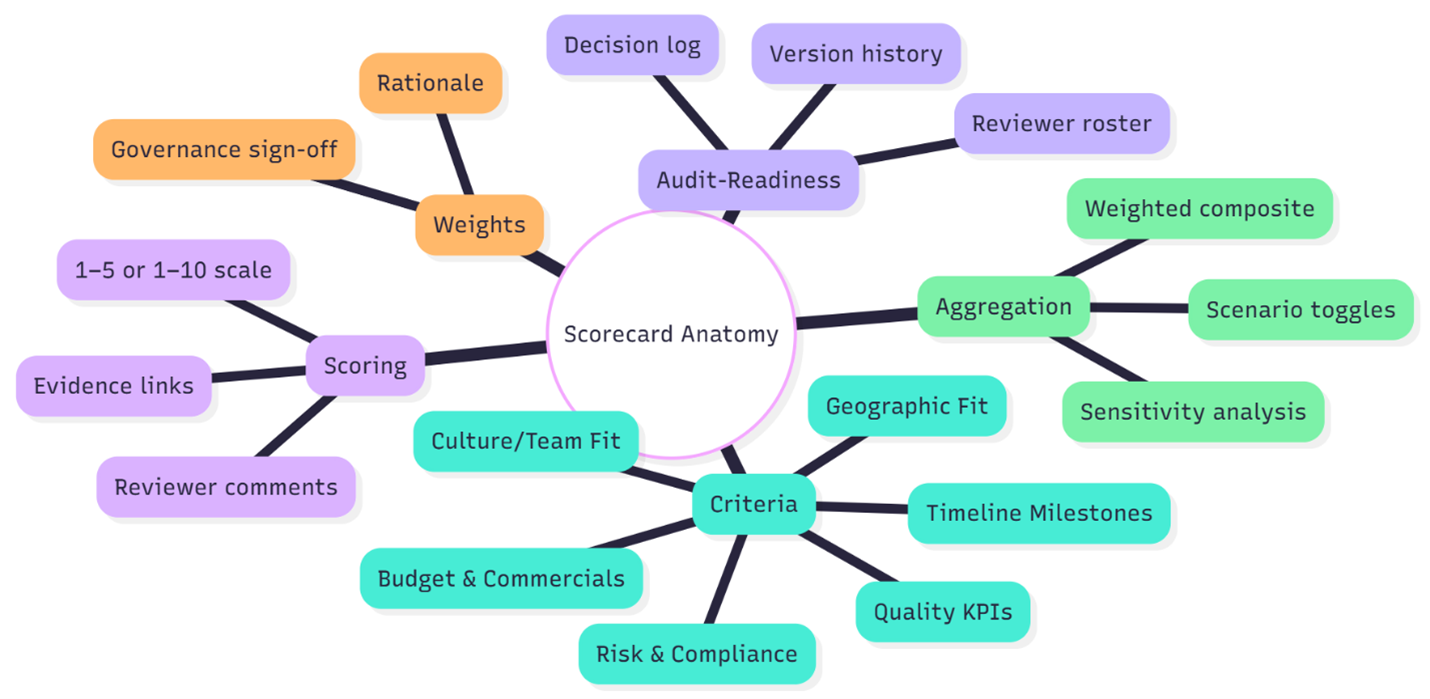
Scorecards enable sponsors to assess vendors holistically. By defining key criteria and assigning weights, you ensure that every critical aspect—from scientific expertise to operational capability—is objectively measured and consistently applied across all vendors.
Objective Comparison
Scorecards eliminate guesswork. Instead of relying on subjective impressions, they provide a quantitative framework for comparing proposals and capabilities. This structured approach helps teams reach alignment faster and defend their decisions with data.
Customization for Your Needs
Every clinical trial is unique. Scorecards can be tailored to reflect your specific priorities—whether it’s adherence to timelines, data quality, site engagement, or cultural fit. This flexibility ensures the evaluation process aligns directly with your program’s objectives.
Data-Driven Decisions
By consolidating inputs from vendor responses, references, and historical performance data, scorecards empower sponsors to make evidence-based decisions. The result is a more defensible selection grounded in analytics rather than assumptions.
Clear Communication
A well-structured scorecard promotes transparency across the evaluation team. Everyone understands the criteria and rationale behind the scores, driving consensus and accountability in the final vendor decision.
Risk Assessment
Scorecards also double as a risk management tool. By incorporating risk indicators—such as cost volatility, resource stability, or communication quality—you can proactively flag and mitigate potential issues before contracting.
Continuous Improvement
The insights gained from scorecard evaluations can be fed back into future RFPs, driving a continuous improvement cycle. Over time, this builds a more efficient, consistent, and benchmarked selection process across programs and therapeutic areas.
Legal Safeguards
In regulated environments, documentation matters. Scorecards serve as auditable records of how vendors were assessed and chosen—providing transparency that can help resolve disputes or inquiries down the road.
What We Do at Clin.AI
At Clin.AI, we help sponsors select and manage their vendors more effectively — making it easier to keep studies on track, within budget, and delivered on time. If you’d like to strengthen your vendor oversight and gain real-time visibility into the progress of your trials, give us a call. We’d be happy to walk you through how we can support your goals.
If that resonates with you, we’d love to show you how Clin.AI works.
Schedule a Demo
About the Author
Kalyan Obalampalli (KO) is the Founder and President of Clin.AI, a disruptive start-up transforming how biotech and pharma sponsors select and manage vendors. With more than 20 years of leadership experience in clinical operations and outsourcing at major pharma and biotech companies, KO brings a unique perspective on how technology can close long-standing gaps in clinical development.
.png)
.png?raw=true)
.png?raw=true)

.png?raw=true)