.png?raw=true)
The Vendor Selection Blunder: An Expensive Oversight In Clinical Trials
Source: ClinAI
By Kalyan Obalampalli

Eighteen years in this industry has taught me that vendor selection is never “just another step” in a clinical trial. It’s one of those areas where decisions ripple far beyond the initial contract — influencing timelines, costs, morale, and even the future of a program.
I’ll never forget one particular episode: we were knee-deep in a study, under pressure to hit FPI. We needed a central lab.
What I thought was a solid process:
Gather multiple bids
Ask all the right questions
Hold bid defense meetings
The reality:
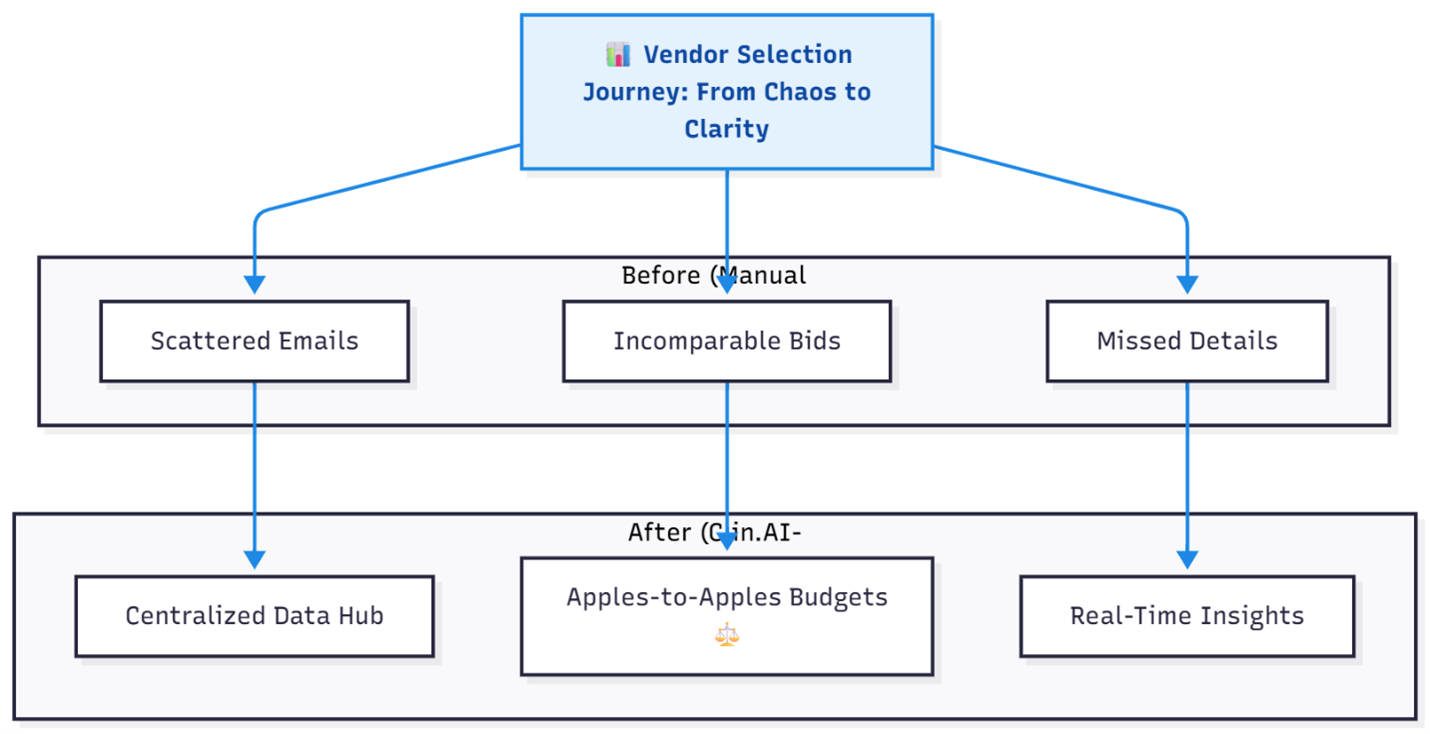
The bids were incomparable — like apples to oranges.
The Q&A was scattered across emails, decks, and spreadsheets.
The bid defense meetings were rushed and overwhelming.
By the time we finally selected a lab, we had waded through 3 projects, 5 vendors, 15 proposals, and countless Excel files. On paper, it looked like we had done everything right.
I had spent hours upon hours combing through PDFs and spreadsheets, scribbling notes, and cross-checking details. I’d debated with colleagues, defended my reasoning, and convinced myself that we had made a sound, data-driven choice.
And yet — buried beneath all that paperwork was one critical truth we missed: the vendor had never actually worked in one of our key geographies. They had implied experience, but in reality, it was through a partnership with another lab. It wasn’t their own capability. We didn’t catch it. We didn’t have the time or the bandwidth to go that deep.
That oversight cost us dearly.
And here’s the part that’s hardest to admit: this wasn’t a one-off mistake. It happened more than once. Each time, I thought, “I’ve done the work, I’ve asked the questions, I’ve put in the hours.” But the sheer noise of vendor comparisons, Excel gymnastics, and scattered communications blurred the bigger picture.
That’s the uncomfortable truth about clinical trials: we operate in controlled chaos. There are too many priorities, too few people, and far too little time. You do the best you can, but inevitably, something slips. And when the light shines on the mistake, the blame game begins — the vendor, the process, the previous team. I’ve seen it all.
The Hidden Weight of Vendor Selection
Vendor selection may seem tactical, but it rarely plays out that way. Teams begin with good intentions: gather proposals, evaluate fairly, and choose wisely. But then reality sets in:
Overwhelm: The volume of bids, documents, and scattered communication makes it hard to see the bigger picture.
Resource constraints: Lean teams already stretched thin simply don’t have the bandwidth.
Risk of regret: Decisions made under pressure can lead to delays, cost overruns, and missed milestones.
Team turnover: When new team members inherit messy processes, frustration and finger-pointing often follow.
It’s not just about picking a vendor. It’s about safeguarding the integrity and continuity of your trial.
Moving Beyond Primitive Tools
Too often, we rely on Excel, emails, and PowerPoints to manage one of the most critical aspects of clinical development. These tools were never designed for the complexity of vendor selection, and the cracks inevitably show.
When things go wrong, vendors are blamed. Or the previous team. Or procurement. In truth, the culprit is usually the process itself.
What Better Looks Like
The way forward lies in structured, transparent processes and purpose-built tools.
With the right framework, sponsors can:
Ask consistent, structured questions across all vendors
Use standardized budget templates for true apples-to-apples comparison
Consolidate responses, feedback, and notes in one place — no more scattered files
Enable smooth negotiations without drowning in Excel
Final Thought
Clinical trials are already hard enough. The last thing sponsors need is for vendor selection to derail timelines, drain budgets, or erode team morale.
That’s the spirit behind what we’ve built at Clin.AI — born out of lessons learned the hard way. Not another “tool for the sake of tools,” but a platform designed to help sponsors select and manage vendors more effectively — making it easier to keep studies on track, within budget, and delivered on time.
At Clin.AI, we bring structure to a process that often feels overwhelming:
Standardized templates for true apples-to-apples comparisons
Centralized Q&A and feedback tracking
Real-time visibility into budgets, timelines, and vendor performance
If you’d like to strengthen your vendor oversight and gain real-time visibility into the progress of your trials, give us a call. We’d be happy to walk you through how we can support your goals.
If this resonates with you, we’d love to show you how Clin.AI works.
What We Do at Clin.AI
At Clin.AI, we help sponsors select and manage their vendors more effectively — making it easier to keep studies on track, within budget, and delivered on time. If you’d like to strengthen your vendor oversight and gain real-time visibility into the progress of your trials, give us a call. We’d be happy to walk you through how we can support your goals.
If that resonates with you, we’d love to show you how Clin.AI works. Schedule a Demo
About the Author
Kalyan Obalampalli (KO) is the Founder and President of Clin.AI, a disruptive start-up transforming how biotech and pharma sponsors select and manage vendors. With more than 20 years of leadership experience in clinical operations and outsourcing at major pharma and biotech companies, KO brings a unique perspective on how technology can close long-standing gaps in clinical development.
.png?raw=true)
.png?raw=true)

.png?raw=true)
.png?raw=true)